Common Mistakes in Night Navigation and How to Avoid Them
Darkness does not change the rules of navigation so much as it removes the margin for sloppiness. A fix that felt generous at noon becomes a guess at midnight. A light you would have identified in a glance at dusk becomes a puzzle, and the shoreline you know well turns into a row of bright dots with no depth behind them. The mistakes below are the ones that keep turning up on night passages, and each of them has a cure that costs little more than a little planning and steady discipline on watch.
Night Vision: The Damage Starts Before Sunset
Full dark adaptation takes a while — think in terms of twenty to thirty minutes in genuine darkness — and a single blast of white light can undo much of it. The common failure is not the skipper who refuses to use a torch; it is the crew member who checks a phone at full brightness, or the cabin light left on while someone hunts for a thermos. Every time that happens, the lookout on deck starts again from near zero.
Build the evening around protecting the eyes you have. Fit red or dim amber filters to the torches you will actually use, and keep the brightness down to the minimum that lets you read a chart or find a winch handle. Keep the companionway hatch closed or curtained so the saloon light does not spill into the cockpit. If someone must go below, have them close the hatch behind them.
- Brief the crew at dusk: no white light on deck, phones on the darkest setting, screens turned away from the helm.
- Use averted vision — look slightly to one side of a faint light rather than straight at it. Faint objects register better on the outer part of the retina.
- Keep one person as dedicated lookout who has not been staring at a screen or a chart plotter.
- Wear sunglasses through the afternoon; the less light your eyes deal with before sunset, the quicker they settle into the dark.
- Watch the basics: fatigue, dehydration and alcohol all dull night vision and judgement. If medication affects your vision or alertness, ask a doctor how it sits with night watches.
Misreading Lights and Being Fooled by the Shore
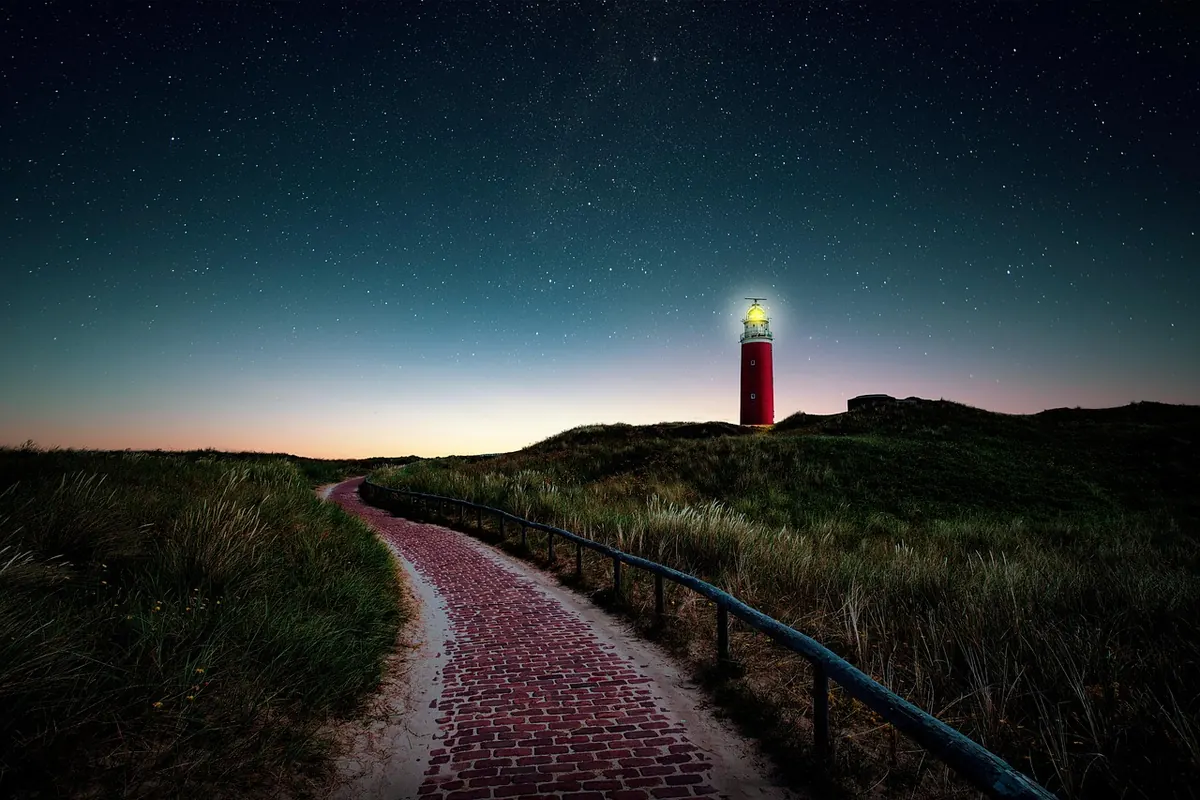
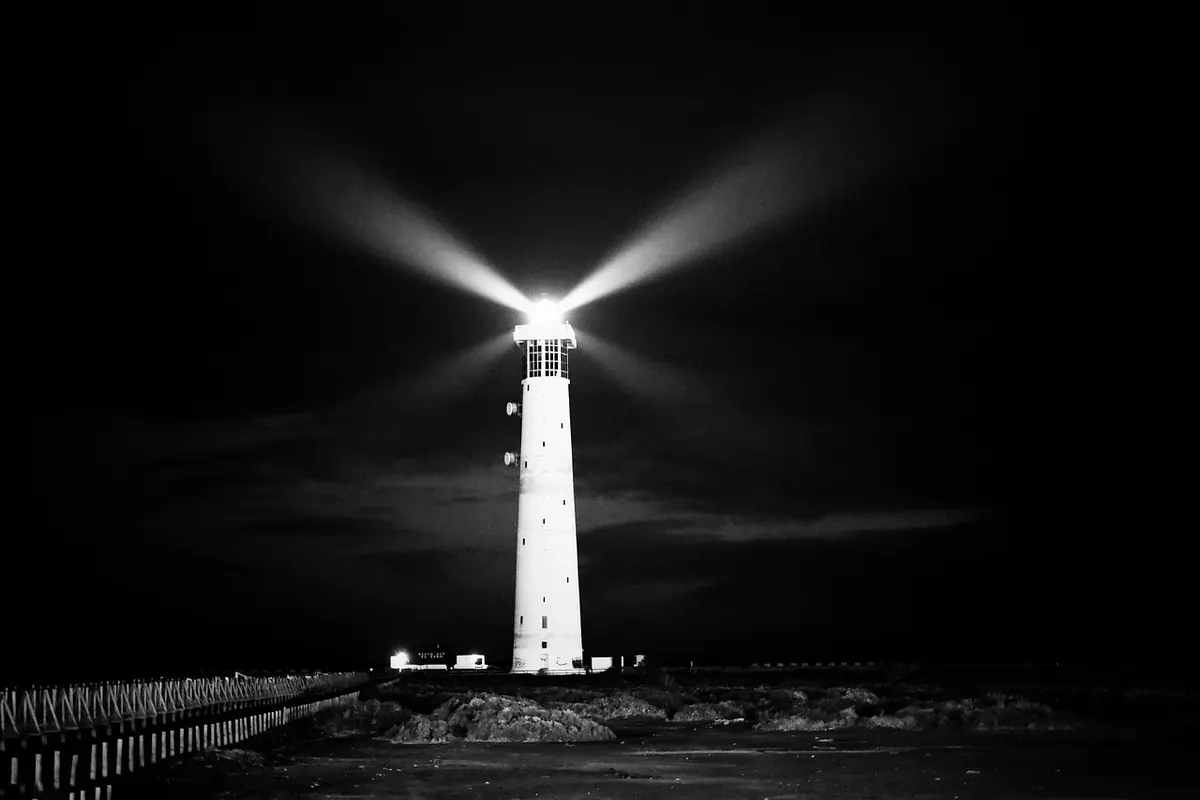
Almost every harbour entrance has a story about a skipper who steered for the wrong light. Shore lights are the usual culprit: a streetlamp on a hill, a lit factory, a car park, a bright white porch that sits exactly where a sectored light should appear. Add a little haze and everything gains a halo, and the loom of a distant lighthouse can look like a nearby ship.
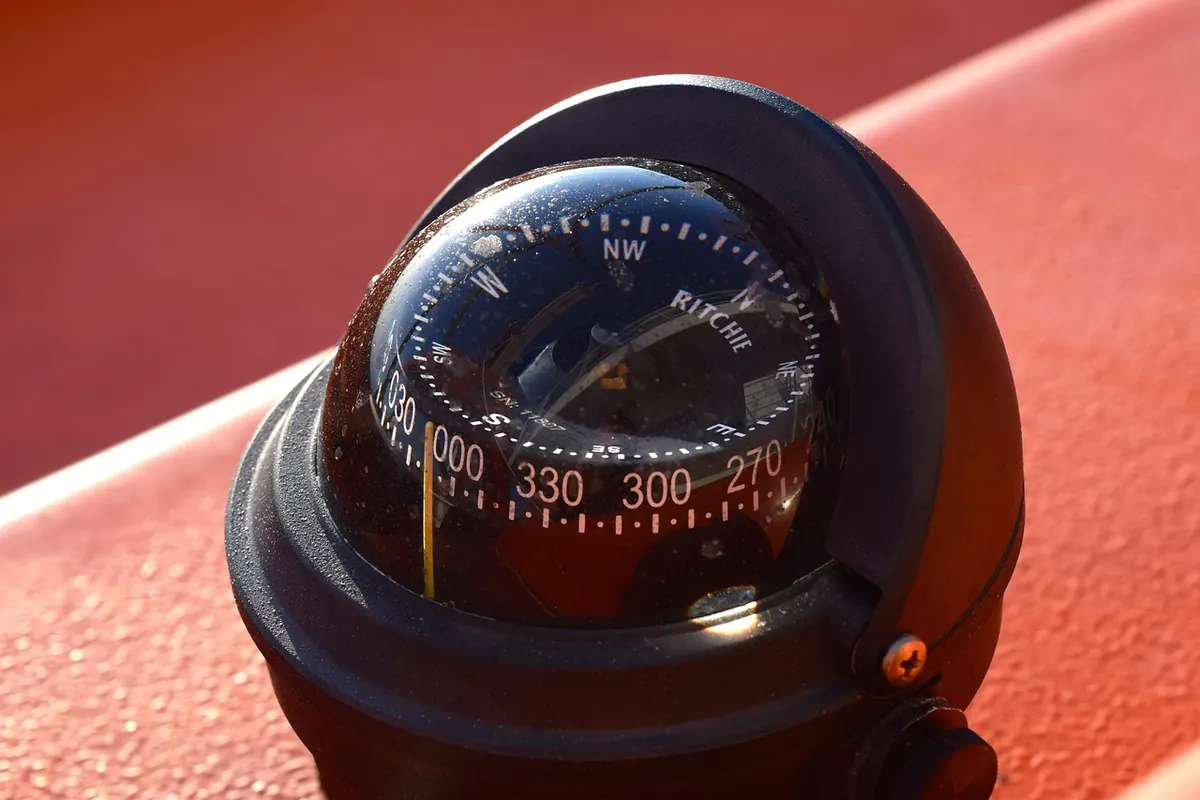
The prevention is mechanical rather than clever. Identify every navigational light by its charted characteristic, and time the flashes with a watch or a stopwatch instead of trusting a glance. Count the sequence twice — a group of three flashes and a group of four can look identical when you are tired. Check the colour against the chart and confirm the bearing with a hand bearing compass. If the light does not match what the chart promises, treat it as unidentified until you have proved otherwise. A light that is not where you expect it is information, not an inconvenience.
Remember too that the range at which you can see a light depends on its elevation, your height of eye, and the visibility. A light that appears early is not necessarily closer than you think; a light that appears late may simply be low and dim.
Collision Judgement: Brightness Is Not Distance
At night the eye loses the cues it uses to judge distance, so it substitutes brightness. That is how a dim, distant ferry gets mistaken for a close fishing boat, and a bright masthead light on a moored yacht gets treated as a vessel under way. The reliable test is not how bright a light looks but how its bearing changes.
Take a bearing on the other vessel's light, note it with the time, and repeat a few minutes later. A bearing that stays put while the light grows brighter means the other vessel is holding a steady course towards you — assume risk of collision until you have proved otherwise. A bearing that moves quickly aft means you will pass ahead; forward, and you will pass astern. Write the bearings down. Memory is a poor instrument at 03:00.
Two further traps deserve mention. First, do not assume the other vessel has seen you: a single white light low on the water may have no lookout at all, and small craft may show nothing that matches your expectations. Second, use radar and AIS to confirm what your eyes suggest, but confirm it — a target on the screen still needs a bearing and a range you have actually read.
Depth Perception and Speed After Dark
Without a horizon, distances compress and then stretch unpredictably. Unlit buoys are closer than they look; lit ones are often farther. The result is the classic night error of cutting a mark too fine, or of approaching an anchorage faster than the water is deep.
Replace guesswork with numbers. Set a radar range ring to a distance you are happy with and keep the target outside it. Read the echo sounder as a trend, not a single figure: a number falling steadily tells you more than a number read once. Slow down early — speed reduces the distance covered in the time it takes to react, and it buys you time to look. If you are entering an unfamiliar harbour, wait for daylight rather than pressing on with a chart and a hope.
Transits are the best gift night gives you, provided the marks are lit. Two lights in line, or a light in line with a charted feature, hold your course far better than any amount of squinting at a plotter.
Route Monitoring: Long Gaps Between Fixes
The most common quiet failure at night is not a wrong decision but a missing one. The watch settles into the cockpit, the boat is going well, and the position has not been plotted for over an hour. Current, leeway and a little helm error then combine to put you a mile off track, and nobody notices until a light appears where no light should be.
Fix at intervals that suit your speed and the hazards around you — every fifteen to twenty minutes on a tight coastal passage is a reasonable habit, and always after a course change or a handover. Note the fix, the log reading and the time. Set the off-course alarm on the plotter, but do not rely on it as your only line of defence: zoom out occasionally to check the whole leg, and place turning waypoints clear of hazards with a sensible turning circle. Keep a paper plot going as a backup, even if it is rough. If the electronics fail, you will be glad of a pencil line.
Handovers deserve their own minute. Give the incoming watch the position, the course, the traffic, the weather trend and anything that made you uneasy. "Nothing to report" is rarely true at night.
A Short Night Routine That Prevents Most of These
Before sunset, darken the boat, check the torches, brief the crew on light discipline and agree who is lookout. At dusk, run a passage plan with timed legs and note the lights you expect to see, in order, with their characteristics. On watch, time every light, take bearings on every vessel that matters, fix on a schedule and write it down. Slow down sooner than you would in daylight, keep a comfortable distance off every mark, and treat anything that does not match the chart as unidentified until proven otherwise.
None of this is dramatic, and that is the point. Night navigation rewards the crew who does the small, dull things consistently — dim lights, short fix intervals, a pencil and a stopwatch. Do those, and the dark stops being a hazard and becomes the best part of the passage.
Photo: Tho-Ge / Pixabay