Best Time of Year to Visit Famous European Lighthouses
The best lighthouse trips rarely happen by accident. They depend on a ferry that runs twice a day, a gate that opens only on weekend afternoons, and a sun sitting in the right quarter of the sky to make white masonry glow rather than glare. Pick the wrong week and you get a locked tower, a cancelled crossing and a horizon the colour of wet concrete. Pick the right one and the same rock feels like a prize. What follows is how the seasons behave at some of Europe's best-known lights, and how to match your dates to the kind of trip you actually want.
Four things that decide your dates
Before you compare months, split the decision into four separate questions. Most disappointments come from answering only one of them.
- Weather and sea state. Swell and wind decide whether the boat sails at all. A Force 6 on the Atlantic edge can scrub an island crossing while the mainland twenty miles away is merely breezy.
- Access. Many towers open around Easter and close at the end of September, and plenty are staffed by volunteers on weekend afternoons only. A lighthouse you can photograph from outside is a different proposition from one you can climb.
- Crowds. European school holidays in July and August fill ferries, car parks and the few guesthouses on small islands. Long weekends in May and early June can be surprisingly busy too.
- Light. A summer sun at midday flattens stonework. Autumn and spring give you low, raking light for hours instead of minutes, and the direction of sunset shifts dramatically between June and October.
A good trip usually means three of those four in your favour. Late September on the Isles of Scilly, for example, still has sailings and open towers, has lost most of the families, and gains a sun low enough to raking-light Bishop Rock. That is not luck. It is arithmetic.
Spring: open gates, empty paths, uncertain skies
April to early June is when the lighthouse year restarts. Boats resume full timetables, seasonal towers unlock their doors, and the paths are still quiet enough that you can hear the swell working at the rocks below. On Ouessant, the Brittany island that guards the Créac'h light, May is a fine compromise: the Penn ar Bed ferries from Le Conquet and Brest are running, the museum is open, and the walk out to the ruined towers at Nividic and Kéréon belongs to you and the gulls.
The trade-off is the sky. Warm air drifting over a cold Atlantic produces sea fog, and the Channel and North Sea coasts can sit in it for days in late spring. Build in a spare night or two, especially on islands, and treat any tower you actually reach as a bonus rather than a guarantee. Cordouan, reached by boat from the Royan side of the Gironde, is a tide-and-weather appointment at the best of times.
Why photographers like spring
The sun is still low enough to model the curve of a tower from mid-morning onwards, cliff flowers are out, and seabirds are back on the ledges. Bring a windproof layer; a May afternoon on a headland in Ireland or Scotland can feel closer to March.
Summer: easy logistics, hard light, big crowds
From late June to August almost everything works. Ferries run at full frequency, towers keep daily hours, and the light lasts long enough that you can photograph a west-facing lantern after dinner and still walk back in daylight. If your priority is simply getting to the lighthouse and up the stairs, this is the least risky window of the year.
It is also the most crowded and the least photogenic. Midday summer sun bleaches white towers and flattens the textures that make them interesting, and southern Europe adds heat and haze. Standing at Cape St Vincent in an August afternoon is an exercise in endurance rather than contemplation. In the Mediterranean, June and September are kinder than July and August on every count.
A few habits make summer work. Take the first boat of the day, save the tower for the two hours before sunset, and use the middle of the day for museums, harbour cafés or a siesta. On the Baltic and in Norway, the long evenings are the whole point; a midsummer visit to a Finnish tower such as Bengtskär, reached by boat from the Kasnäs side, gives you usable light at ten at night.
Autumn: the photographer's window
September and October are the connoisseur's months. The sea is at its warmest, the first gales scour the haze out of the air, and the sun drops low enough to side-light a tower for most of the day. Swell arrives with the equinox, which gives you the drama of spray against granite without the closed roads of midwinter.
This is the season for the great offshore lights seen from land: Fastnet Rock from the hills of Cape Clear, Bishop Rock from St Mary's, La Corbière on Jersey with its causeway and its wave-washed approach. Just accept the trade. Autumn gales cancel sailings, so read the operator's cancellation terms before you book, keep a mainland plan B, and remember that by late October the useful daylight has shrunk to roughly nine to five.
Winter: storm watching, short days, closed doors
Most towers are shut, several island ferries stop or run a skeleton service, and the weather decides your schedule rather than you. What you get in return is the Atlantic at its most theatrical and headlands entirely to yourself. Cabo da Roca and the Portuguese west coast stay mild, the Brittany and Cornwall coasts deliver big seas, and the Wadden islands remain reachable year-round from Harlingen even when the towers themselves are not taking visitors.
Watch the water from a sensible distance. Wet ledges and a rising swell are a bad combination, and the seventh wave is a cliché because it happens. Stay high, stay back, and check the tide before you commit to a low-level viewpoint.
Regional timing at a glance
Atlantic edge: Ireland, Cornwall, Brittany, Portugal
May to early July and September are the sweet spots. Expect fog in late spring, gales from October, and the most reliable crossings in high summer.
Mediterranean: Spain, France, Italy, Greece, Croatia
Aim for late April to June, or September into October. Summer heat and haze flatten both the light and your enthusiasm for climbing.
North Sea and Baltic: Netherlands, Germany, Denmark, Sweden, Finland, Norway
June to August for long evenings and open towers; spring and autumn for empty paths and clear air, with ice and short days limiting winter access in the north.
A practical planning checklist
- Confirm opening dates directly. Tower hours change with staffing and repairs; a phone call or a look at the local tourist office page beats an old guidebook.
- Book the crossing before the bed. On small islands the boat is the constraint, not the accommodation.
- Check the tide table if the approach involves a causeway, a slipway or a low-water walk.
- Note sunset time and direction. A simple sun-position app tells you whether the lantern will be lit face-on or in silhouette.
- Pack for three seasons on any Atlantic headland: windproof shell, warm mid-layer, and something to keep spray off the lens.
- Hold a wet-weather alternative — a harbour museum, a second tower inland, a day in town — so a blown-out crossing does not ruin the week.
Choose the season to match the trip: summer to climb, spring and autumn to photograph, winter to watch. Then leave a day spare, because the sea keeps its own timetable.
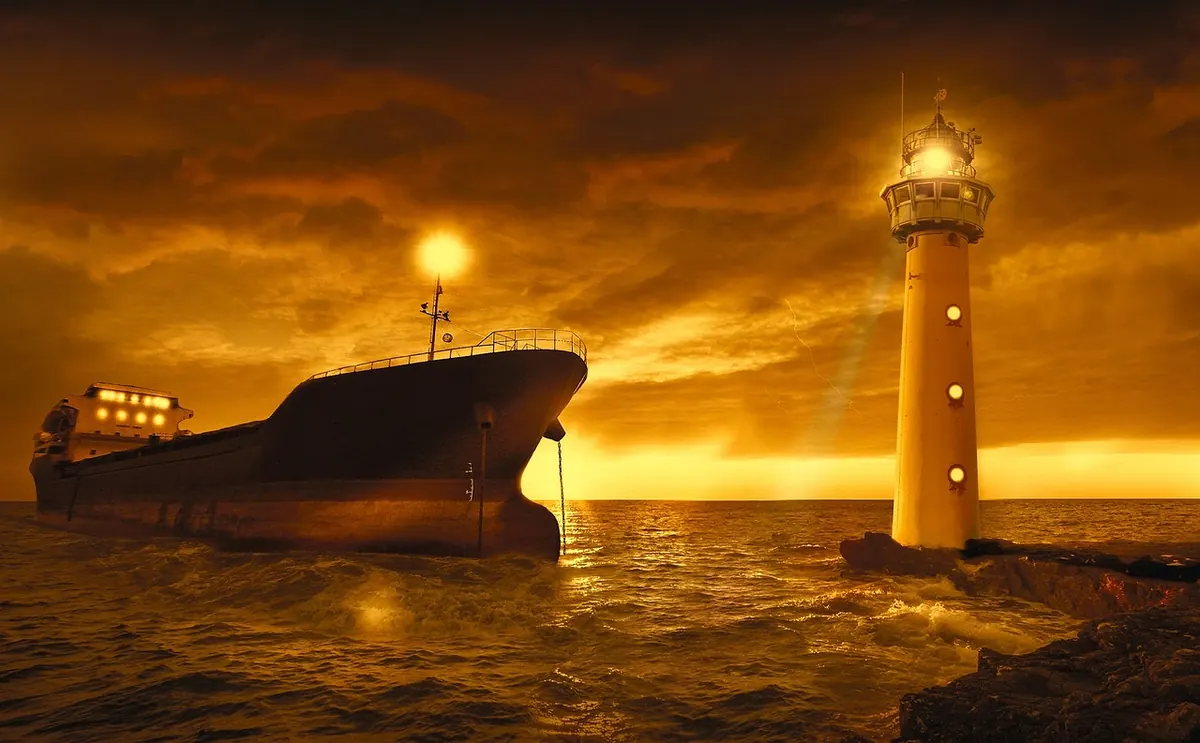
Photo: Three-shots / Pixabay